· Los Angeles Travel Guides · 7 min read
Los Angeles Fun Facts: Hollywood, History & Surprising LA Stories
Discover surprising facts about Los Angeles, from Hollywood and the Oscars to UCLA's role in internet history, movie locations, murals, beaches, and local landmarks.
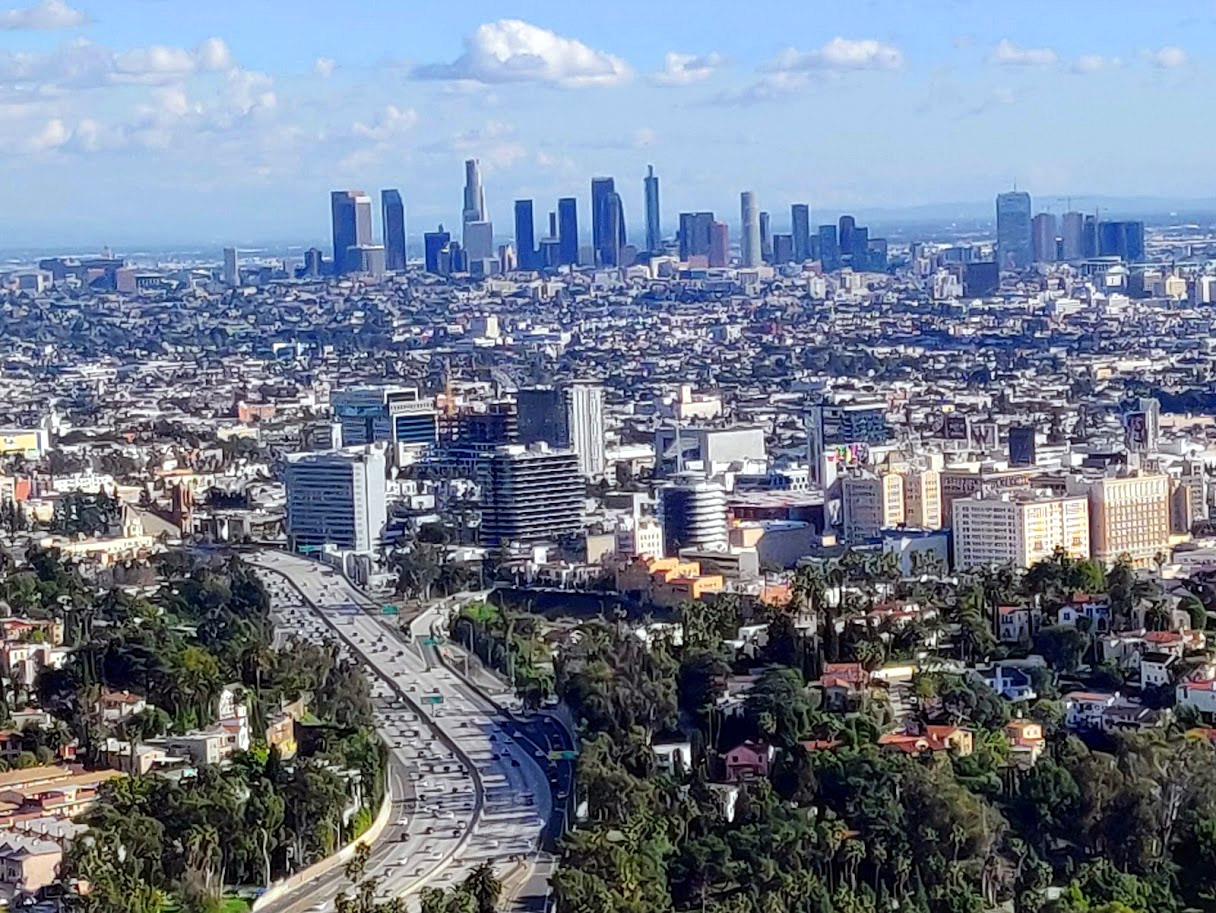
Los Angeles is much more than movie premieres, palm trees, and freeway traffic. The city has launched technologies, transformed popular culture, inspired artists, and repeatedly reinvented itself across a vast patchwork of neighborhoods.
These Los Angeles fun facts connect real history with places visitors can still experience. They also correct several legends that have circulated for years as fact. Whether you are planning a first visit, preparing an LA trivia night, or simply curious about the City of Angels, here are some of the stories that make Los Angeles unlike anywhere else.
1. A two-letter message from UCLA helped launch the internet age
On October 29, 1969, a team led by UCLA professor Leonard Kleinrock attempted to send the command LOGIN from UCLA to the Stanford Research Institute over ARPANET, a precursor to the modern internet. The receiving computer got the letters L and O before the system crashed.
The connection was restored and the full command was sent later that evening, but “LO” entered technology history as the first host-to-host message transmitted over ARPANET. The experiment took place in Boelter Hall on UCLA’s Westwood campus. UCLA’s account of the first ARPANET message
2. Los Angeles began with 44 settlers
The city’s official founding date is September 4, 1781. Forty-four settlers established the community that became Los Angeles near the Los Angeles River. The settlement’s Spanish name evolved over time into the familiar name Los Angeles—“The Angels.”
The historic center of the early pueblo can be explored around El Pueblo de Los Angeles and Olvera Street, across from Union Station. Los Angeles historical timeline
3. Hollywood was a community before it became an industry
Hollywood did not get its name from a 1920s movie theater. Land developer Harvey Henderson Wilcox used the name for a residential community in the 1880s, decades before Hollywood became synonymous with filmmaking. Hollywood residents voted to join the City of Los Angeles in 1910.
The film business followed. Nestor Film Company opened a Hollywood studio in 1911, helping turn a place name into a global shorthand for movies and television.
4. The Hollywood Sign originally advertised real estate
When it appeared in 1923, the hillside sign read HOLLYWOODLAND. It was created to promote a housing development, not the movie industry. The last four letters were removed in 1949, leaving the landmark recognized around the world today. History of the Hollywood Sign
Visitors can see the sign from several public viewpoints included on a private Hollywood tour, but the steep hillside immediately around the letters is restricted.
5. The origin of the name “Oscar” is still a Hollywood mystery
The Academy Award statuette is officially called the Academy Award of Merit. A popular story says Academy librarian Margaret Herrick thought the figure resembled her Uncle Oscar. The Academy itself cautions that the nickname’s precise origin is unclear, although it was widely used by the 1930s and officially adopted by the Academy in 1939. The Academy’s history of the Oscar statuette
Today, the Oscars are presented at the Dolby Theatre on Hollywood Boulevard, close to the TCL Chinese Theatre and Hollywood Walk of Fame.
6. The Hollywood Sign and the first Academy Awards arrived in the same decade
The Hollywoodland sign went up in 1923. The first Academy Awards ceremony followed in 1929 at the Hollywood Roosevelt Hotel, with fewer than 300 guests attending a private dinner. These two events helped cement Hollywood’s identity just as synchronized sound was transforming motion pictures.
7. Downtown Los Angeles regularly plays other cities on screen
Downtown LA’s mix of civic buildings, historic theaters, glass towers, tunnels, and industrial streets makes it unusually versatile for filmmakers. Los Angeles City Hall appeared as the Daily Planet building in the 1950s Adventures of Superman television series, while the Westin Bonaventure’s glass elevators became memorable locations in films including True Lies and In the Line of Fire.
Union Station has portrayed locations far beyond Southern California, and the city’s warehouses and river bridges remain staples of action filmmaking. Our guide to Fast & Furious filming locations in Los Angeles explores several places fans can recognize today.
8. See’s Candies opened its first shop on Western Avenue
Charles See opened the first See’s Candies shop at 135 Western Avenue North in Los Angeles in 1921. The company used recipes associated with his mother, Mary See, whose portrait remains part of the brand’s identity. By 1925, See’s had a dozen shops around Los Angeles. See’s Candies company timeline
9. Venice really was designed as a California version of Venice, Italy
Developer Abbot Kinney opened “Venice of America” in 1905 as a seaside resort with canals, gondolas, attractions, and an oceanfront entertainment district. Several residential canals survive, although the modern Venice neighborhood is also known for its boardwalk, beach culture, street performers, skateboarding, and public art.
Venice can be combined with Santa Monica and Malibu on a private coastal sightseeing tour.
10. Los Angeles County has roughly 75 miles of coastline
Los Angeles County’s Pacific coastline stretches for approximately 75 miles, from the Malibu area to Long Beach. The number is a county measurement—not the coastline of the City of Los Angeles—and it includes many independent coastal cities.
That distinction matters in LA: places commonly grouped together by visitors may be separate cities, unincorporated communities, or neighborhoods within Los Angeles. Geographic facts about Los Angeles
11. Los Angeles is an open-air gallery
Rather than relying on an unstable count of murals, it is more accurate to describe Los Angeles as one of the world’s great mural cities. Works across Downtown, East LA, South LA, Venice, and the San Fernando Valley tell stories of migration, labor, civil rights, neighborhood identity, and popular culture.
Judith F. Baca’s The Great Wall of Los Angeles extends for more than half a mile along the Tujunga Wash and tells California history through perspectives often excluded from traditional monuments. Murals are not merely decoration here; they are part of the city’s living historical record.
12. The city contains many cities within it
Los Angeles is a single municipality, but its neighborhoods can feel like different worlds. Downtown’s early civic center, Hollywood’s entertainment landmarks, Westwood’s university campus, San Pedro’s working waterfront, Venice’s beachfront culture, and the residential hills of Bel Air all tell distinct parts of the LA story.
That scale is why a private Los Angeles city tour can be useful for first-time visitors: the major landmarks are spread across a much larger area than many travelers expect.
Frequently asked questions about Los Angeles
Was the internet invented in Los Angeles?
No single event created the modern internet, but UCLA was the first node on ARPANET and sent its first host-to-host message to the Stanford Research Institute in 1969. It is fair to say Los Angeles played a foundational role in internet history.
Why is Hollywood called Hollywood?
The name was used for a residential development created by Harvey Henderson Wilcox in the 1880s. It predates Hollywood’s rise as the center of the American film industry.
Is Hollywood a separate city?
No. Hollywood became part of the City of Los Angeles in 1910. Nearby Beverly Hills and West Hollywood are separate incorporated cities.
What Los Angeles history can visitors see in person?
Visitors can explore El Pueblo and Olvera Street, Union Station, Los Angeles City Hall, Hollywood Boulevard, the Hollywood Sign, Venice’s canals, UCLA, and historic filming locations. Browse all private Los Angeles tours to connect these places with a local guide.
Last fact-checked September 14, 2026. Historical details can be refined as archives publish new research; time-sensitive visitor information should always be confirmed with the destination.